

- The unwritten rules of professional etiquette
- Formal rules of procedure or etiquette
- Rules of golf etiquette
Rules of golf etiquette
The internet is an enrichment for everyone – in everyday life, at school and at work. However, it brings with it some risks and downsides, such as the dark net. Talk to your child and explain the possible risks of the internet https://magazroxik.info/. Respect your child’s privacy and explain the following rules for children on the internet:
Due to the large variation between what is considered acceptable behavior in various professional environments and between professional and social networks, codified internal manuals of style can help clarify acceptable limits and boundaries for user behavior. For instance, failure to publish such a guide for e-mail style was cited among the reasons for a NZ$17,000 wrongful dismissal finding against a firm that fired a woman for misuse of boldface colorful all caps text in company-wide e-mail traffic.
“The internet is a vast and interconnected space, and your online activities contribute to forming your digital identity and reputation. What you share online can have long-lasting effects on how others perceive you,” Lev explains.
The term has been used as early as 1998 and has gone through several changes in description as newer technological advances have changed the method and frequency of how people interact with one another online. Classes on digital citizenship have been taught in some public education systems and some argue that the term can be “measured in terms of economic and political activities online”.
The unwritten rules of professional etiquette
Did you know that no one cares about your grades in graduate school because everyone gets As? Did you know that all students are doing extra activities to pad their CVs and resumes? Do you wonder how you are supposed to stand out among your peers and get access to special projects, training opportunities, or internship placements? Do you know th…
If you take notice of this training, the conglomeration of these experiences will begin to coalesce around the subtle expectations of professional etiquette. If you do not notice this training, you may feel lost in a sea of expectations that you do not understand. Sure, there are general principles that guide professional attitude and deportment, but how do you apply those principles when
Did you know that no one cares about your grades in graduate school because everyone gets As? Did you know that all students are doing extra activities to pad their CVs and resumes? Do you wonder how you are supposed to stand out among your peers and get access to special projects, training opportunities, or internship placements? Do you know th
The people in your program who have evaluative power or authority are the ones who will most directly judge your professionalism. Because of this, I use terms such as professor, faculty member, instructor, supervisor, and advisor somewhat interchangeably; teaching assistants and other senior students may also at times fill teaching or advising roles. It cannot be overstated that how you behave around staff as well as peers also shapes your professional reputation. For example, when a student is rude to our administrative assistant, the faculty hears about it. When students come forward with a concern about the behavior of one of their peers, the faculty will investigate. All of this protects the profession.
Examples like these highlight the clear difference between competence and professionalism. Your work quality and your interpersonal skills and attitude are distinctly different areas of development. You can be very competent in your work—doing everything with high quality—and yet be difficult to work with. You can be competent and unprofessional or incompetent and professional. You could also be both competent and professional, though you could also be neither.
Formal rules of procedure or etiquette
Board meeting etiquette extends beyond the meeting itself. It’s up to the chair or board secretary to provide a summary of the meeting, read the resolutions and the future steps. But board members should also review the post-meeting papers, raise any suggestions or concerns regarding possible meeting reviews, understand the resolutions, and carry on appropriately.
Rooted in democratic principles, these rules provide a structured order where majority decisions and minority voices are equally valued. Under Robert’s Rules, all meeting participants can express their views in an equitable and structured way.
Definitely! Virtual board meetings benefit from proper, structured discussions of the issues at hand just as much as in-person meetings. In fact, the Rules of Order are even more important given the additional difficulties to communication that the internet sometimes brings.
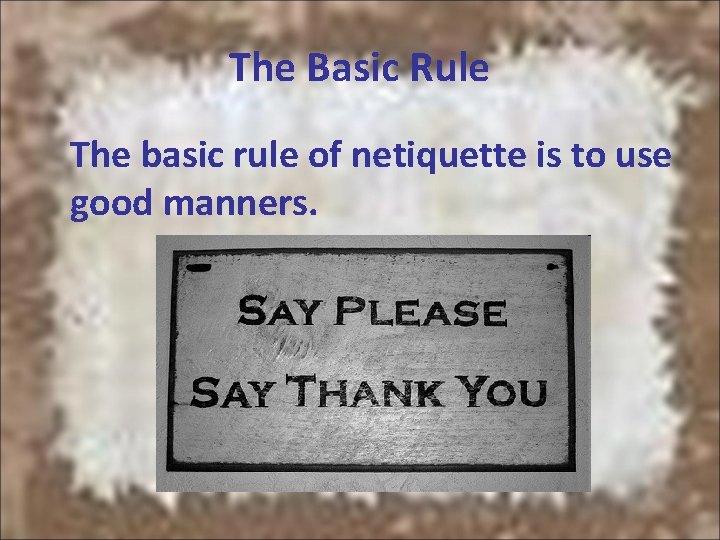
Practicing good etiquette involves being mindful of others’ feelings, showing empathy, and adapting to different social contexts. It encourages individuals to be polite, considerate, and well-mannered, regardless of their personal preferences or beliefs. By adhering to etiquette guidelines, we demonstrate respect for others and contribute to a harmonious social environment.
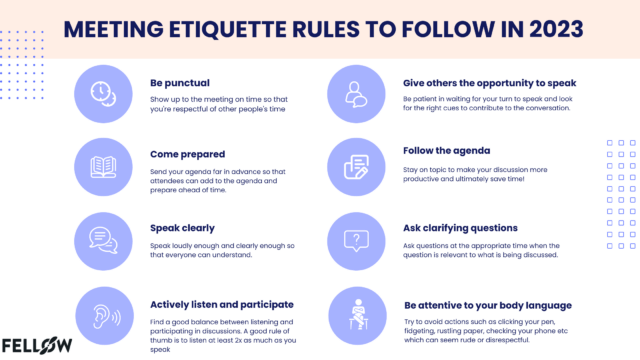
Board meeting etiquette extends beyond the meeting itself. It’s up to the chair or board secretary to provide a summary of the meeting, read the resolutions and the future steps. But board members should also review the post-meeting papers, raise any suggestions or concerns regarding possible meeting reviews, understand the resolutions, and carry on appropriately.
Rooted in democratic principles, these rules provide a structured order where majority decisions and minority voices are equally valued. Under Robert’s Rules, all meeting participants can express their views in an equitable and structured way.
Rules of golf etiquette
Golf etiquette is a major part of the game. From ensuring you stay quiet when someone’s taking their shot to properly maintaining your course, adhering to proper golf etiquette can help make everyone’s round more enjoyable and respectful. In this blog post, we’ll look at some key tips for managing your behavior on the golf course and learn why it’s important to respect other players and show appreciation for the game itself.
This might seem like an unnecessary use of time, but it will actually help speed up your round. Plus, it can bring good karma. Anecdotally, I’m 75% more likely to find my first ball if I hit a provisional.
One of the key aspects of good golf etiquette is to show up early for your tee time. Being late causes a lot of disruption to the other players and doesn’t give you any benefits in improving your game. Aim to arrive at least 20-30 minutes before your tee time so that you can check in, stretch and get loose by hitting some range balls. Not only will it increase your comfort level in those first few holes, but it will also help you to become familiar with the course and the environment.
It’s understandable why the USGA made this change. Public courses are often crowded, and players can get backed up if they take too long to look for their ball. Slow play can ruin a round of golf, so it’s important to stick within the allotted time frame. Players should also watch where their ball is going when hitting to find it quickly.
It is important to follow proper golf etiquette when warming up on the putting green. Warming up should be done with a bucket of range balls, but players should not use more than three golf balls as this can confuse other players and disrupt their games. Golfers are also asked to mark their ball before putting it on the ground—this way, it is easier to identify which ball is whose.